
WELCOME BONUS 300%
UP TO €2000 + 100
FREE SPINS
UP TO €2000 + 100
FREE SPINS
Home → Blackjack
Blackjack at Megawin Casino: Variants, Rules and Payouts
How long do 100 EUR last at a 1 EUR table?
Blackjack 6 Decks carries a house edge of 0.46% against a standard blackjack payout structure where the dealer stands on soft 17. This mathematical advantage allows a player to sustain their bankroll significantly longer than games with higher margins, provided they adhere strictly to the required basis strategy. The low variance inherent in this specific rule set ensures that the 100 EUR stake depletes slowly over many hands.
Infinite Blackjack from Evolution offers unlimited seats and maintains a house edge of 0.53%, which is comparable to the 0.46% found in the 6-deck variant. Both tables allow bets starting at 1 EUR, enabling players to stretch their initial 100 EUR deposit across hundreds of rounds without immediate risk of ruin. The RTP for Infinite Blackjack sits at 99.47%, confirming its efficiency as a low-cost entertainment option.
Quantum Blackjack Plus Live introduces quantum multipliers up to 1,000x, but these volatile features drastically reduce the longevity of small stakes compared to standard tables. While the base RTP is 99.57%, the inclusion of side bets and multiplier mechanics increases volatility, meaning the 100 EUR bankroll may vanish faster during losing streaks. Players seeking duration should avoid the bonus features and stick to the main game logic.
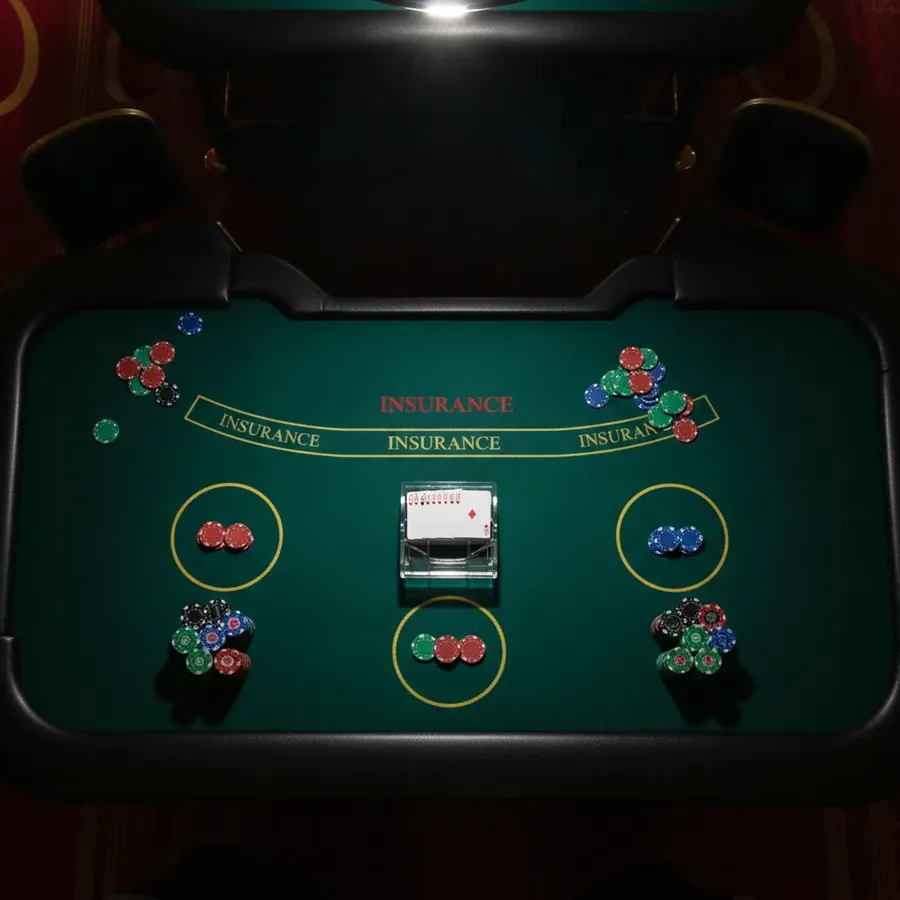
What Hole Card Means at a Live Table
The hole card is the second card dealt face-down to the dealer, determining whether they have achieved blackjack before players act on their hands. In Quantum Blackjack Plus Live, this card remains hidden until after all players have completed their actions, ensuring fair dealing procedures are maintained throughout the round. This mechanism prevents any bias in player decisions based on visible dealer strength.
Lightning Blackjack by Evolution also utilizes a hole card system where the dealer checks for blackjack immediately after the initial deal. If the dealer holds an ace or ten-value card, the hole card is revealed instantly, potentially pushing hands or awarding wins before players make moves. This rapid resolution process keeps the game pace fast while preserving the integrity of the standard blackjack rules.
The presence of the hole card directly impacts the effectiveness of insurance bets, which pay 2:1 if the dealer's hole card completes a natural twenty-one. Insurance has a high house edge of 7.47%, making it a poor value proposition for most strategic players who reject this side bet. Avoiding insurance preserves the theoretical return rate closer to the optimal 99.56% offered by Lightning Blackjack.
Statistics display saves the last 100 rounds
The statistics panel tracks historical data from the previous 100 rounds, providing insight into recent outcomes without influencing future probabilities. Each independent hand remains statistically isolated, meaning past results do not alter the fixed house edge of 0.46% in the 6-deck variant. This feature serves primarily as a record-keeping tool rather than a predictive aid for skilled players.
Evolution’s Infinite Blackjack displays similar historical metrics, allowing users to monitor trends such as dealer bust rates or frequency of player blackjacks. The displayed data reflects the RNG or live dealer performance over a finite sample size, which cannot guarantee future success due to the law of large numbers. Relying on short-term patterns often leads to erroneous betting adjustments.
Quantum Blackjack Plus Live integrates these statistics alongside quantum multipliers, showing how often significant payouts occurred in the recent history. The 1,000x multiplier events are rare occurrences that skew the visual perception of win frequency, potentially misleading casual observers about true odds. Understanding that each spin is random helps maintain realistic expectations regarding potential returns.
Splitting costs double bet: plan budget
Splitting pairs requires placing an additional wager equal to the original bet, effectively doubling the total amount risked per hand. In Blackjack Surrender, splitting is permitted under liberal rules, allowing players to maximize opportunities when holding strong starting cards like eights. This action increases exposure but can improve the expected value if executed correctly according to basic strategy.
Resplitting Aces adds another layer of complexity, where players may split again if dealt another ace, though typically limited to one additional card per hand. This rule improves the RTP by approximately 0.08 percentage points compared to non-resplit variants, offering a slight mathematical advantage. Managing the budget requires accounting for multiple active hands simultaneously during a single round.
Double After Split (DAS) further complicates budget planning by permitting players to double their bet on newly created hands after a split occurs. DAS reduces the house edge by roughly 0.14 percentage points, enhancing the overall profitability of the game session. Players must ensure their bankroll supports these increased wagers to fully capitalize on these favorable rule variations.
Highroller from 500 EUR per hand
High rollers accessing Quantum Blackjack Plus Live can place bets ranging up to 5,000 EUR per hand, utilizing the table's high-limit capacity. The quantum multipliers offer potential wins up to 1,000x the stake, creating massive payout possibilities for large wagers placed strategically. This range accommodates serious players seeking substantial returns within a controlled environment.
Infinite Blackjack supports maximum bets of 5,000 EUR, providing ample space for high-stakes action without restriction on the number of participants. The unlimited seating model ensures that even large volumes of capital can be deployed efficiently across various tables or positions. Highrollers benefit from the consistent 99.47% RTP associated with this popular evolution title.
Lightning Blackjack caps individual hand limits at 2,500 EUR, still catering to high-volume players through its lightning multiplier mechanic. Wins are multiplied by factors up to 25x, offering amplified rewards for successful high-stake hands despite the lower maximum bet limit. This structure balances accessibility for premium players with manageable risk exposure for the operator.
Blackjack variants at a glance
| Variant | Payout | House edge | Rule | Bet range |
|---|---|---|---|---|
| Blackjack Auszahlung 6:5 statt 3:2 (6 Decks) | 98.15% | 1.85% | Ersatz von 3:2 durch 6:5 fügt exakt +1.39 Prozentpunkte zum Vorteil des Casinos hinzu – stärker als jede andere Regeländerung. Bei $10 Einsatz zahlt Blackjack $12 statt $15. | Blackjack 6:5, Gewinn 1:1 |
| Blackjack Surrender (Late Surrender) – Regel-Effekt | n.a. (Regel-Modifikator) | −0.08 Prozentpunkte | Spieler gibt Hand nach Dealer-Blackjack-Prüfung auf, verliert die Hälfte des Einsatzes. Verbessert RTP um ca. 0.08 Prozentpunkte. Early Surrender ist wesentlich wertvoller (bis −0.6 Prozentpunkte), aber extrem selten. | Rückzahlung 50% des Einsatzes |
| Blackjack Ein Deck, klassische Regeln, 3:2 | 99.85% | 0.15% | Weniger Decks = niedrigerer Vorteil; ein Deck gibt ca. −0.48 Prozentpunkte gegenüber 8 Decks. Oft durch 6:5 Auszahlung kompensiert. | Blackjack 3:2, Gewinn 1:1 |
| Blackjack Insurance / Versicherung (6–8 Decks) | 92.53% | 7.47% | Separate Nebenwette bis 50% der Hauptwette, wenn der Dealer ein Ass hat. Basisstrategie schreibt IMMER Ablehnung vor (außer Karten zählen bei True Count ≥ +3). Bei einem Deck Vorteil ≈ 5.88% | Insurance 2:1 |
| Blackjack 6 Decks, S17, DAS, DOA, Auszahlung 3:2, Basisstrategie | 99.54% | 0.46% | Dealer steht auf Soft 17; Verdopplung auf jeder Zweierkarte; Verdopplung nach Split erlaubt; keine Aufgabe. Basisstrategie ist für diesen Wert zwingend | Blackjack 3:2, normaler Gewinn 1:1, Insurance 2:1 |
| Blackjack Liberal Vegas Strip (liberale Regeln, 3:2) | 99.72% | 0.28% | Günstigste Regelkombination: S17 + DAS + Resplit + Late Surrender. Standardabweichung 1,15 | Blackjack 3:2, Gewinn 1:1 |
Infinite Blackjack vs Classic Seven-Seat Table
Quantum Blackjack Plus Live by Playtech features a betting range from 1 to 5,000 EUR with Quantum Multipliers reaching up to 1,000x on three-card combinations totaling 21 points. This high-volatility structure significantly alters the risk profile compared to standard tables where multipliers are absent entirely. Players must adjust their bankroll management strategies to accommodate these extreme payout potentials during active hands.
Infinite Blackjack provided by Evolution allows an unlimited number of players at the table while maintaining a fixed betting limit between 1 and 5,000 EUR. The game includes four specific side bets including Any Pair, 21+3, Hot 3, and Bust It options for additional wagering variety. This capacity ensures continuous gameplay availability regardless of player traffic volume at the virtual seat count.
Lightning Blackjack also offered by Evolution restricts its maximum stake to 2,500 EUR while introducing Lightning Multipliers that can award up to 25x on winning hands. The lower cap combined with moderate multipliers creates a distinct variance pattern compared to the higher stakes of the other two titles. Analyzing these limits helps determine which table suits specific budget constraints and risk tolerance levels.
Double Down after Split: DAS
The Liberal Vegas Strip variant permits Double After Split alongside Resplitting Aces, improving the RTP to 99.72% with a house edge of only 0.28%. This rule combination represents one of the most favorable configurations available to strategic players seeking optimal mathematical returns. Allowing doubling on split hands reduces the casino's advantage significantly compared to restrictive environments prohibiting this action.
Standard Blackjack with Six Decks operating under S17 rules typically allows Double After Split but denies Resplitting Aces, resulting in a slightly higher house edge of 0.46%. The restriction on splitting aces forces players to play weaker hands as single units rather than maximizing potential value through separation. This difference impacts long-term profitability despite identical base game mechanics and dealer standing rules.
Blackjack Ein Deck offers classic rules with a superior RTP of 99.85% due to reduced deck penetration lowering the house edge to 0.15%. However, the single-deck format often compensates with less favorable payout structures like 6:5 for natural blackjacks which drastically increase costs. Comparing DAS benefits against deck count reveals complex trade-offs between rule generosity and game frequency constraints.
Early Surrender is removed from many tables
Late Surrender improves the Return to Player percentage by approximately 0.08 percentage points when a player forfeits half their bet after checking for dealer blackjack. This modifier provides marginal protection against immediate losses without altering the core strategy requirements for subsequent decision-making phases. Early Surrender remains significantly more valuable at up to -0.6 percentage points but appears extremely rarely in modern digital offerings.
Blackjack Insurance serves as a separate side bet paying 2:1 when the dealer shows an Ace, costing roughly 7.47% house edge against a 92.53% RTP baseline. Base strategy dictates always rejecting this wager unless counting cards reaches a true count of +3 or higher for positive expectation. The insurance mechanic operates independently from main hand outcomes yet heavily influences overall session volatility and expected loss rates.
The absence of Early Surrender forces players to endure full losses on weak starting hands like twelve against a dealer ten, whereas surrender would mitigate damage immediately. Without this escape hatch, the mathematical disadvantage accumulates faster over thousands of hands compared to games offering early exit options. Evaluating surrender availability becomes crucial for minimizing long-term erosion of bankroll resources during extended play sessions.
Six Card Charlie Rule
Infinite Blackjack incorporates unique side mechanisms alongside its standard six-deck composition, though specific rule variations like Six Card Charities require careful examination of paytables. Understanding how additional drawing opportunities affect the house edge necessitates comparing base RTP figures against modified outcome probabilities for extended hands. Players must verify whether such bonuses apply automatically or require specific qualifying conditions before expecting enhanced payouts.
Quantum Blackjack Plus Live utilizes multipliers up to 1,000x primarily targeting thirty-one point totals rather than traditional twenty-one outcomes, shifting focus toward high-variance events. This multiplier system replaces conventional bonus structures found in other variants, demanding adaptation from players accustomed to standard payout schedules. The interaction between quantum effects and card counting strategies remains theoretically undefined due to randomization algorithms employed.
Lightning Blackjack applies multipliers up to 25x on winning hands, creating a different risk-reward dynamic compared to the aggressive scaling seen in quantum versions. These multipliers operate independently of card counts or sequences, relying instead on predetermined random number generation triggers activated per round. Analyzing these distinct bonus architectures helps categorize each title according to preferred volatility profiles and engagement styles.
Blackjack Contributes Only 10 Percent to Wagering
The 300% welcome bonus up to €2,000 plus 100 free spins imposes strict contribution rates where table games like Blackjack count for only 10 percent toward wagering requirements. This low allocation contrasts sharply with slots which contribute 100 percent, making bonus clearance significantly slower and more expensive for card game enthusiasts. Calculating total turnover needs requires dividing the bonus amount by the contribution percentage to determine actual wagering volume demanded.
A €2,000 bonus cleared exclusively through Blackjack requiring 10 percent contribution generates a massive €20,000 wagering obligation before withdrawal eligibility activates. This figure represents twenty times the initial credit value, imposing substantial pressure on bankroll sustainability during the clearing period. Players utilizing high-house-edge variations like 6:5 payouts face even greater difficulties achieving completion within reasonable timeframes.
Utilizing the 100 free spins attached to the offer allows players to generate independent winnings unaffected by the restrictive table game contribution percentages. These spins typically apply to designated slot titles where full 100 percent contribution applies, providing a more efficient path to unlocking funds. Combining spin outcomes with strategic blackjack play maximizes overall bonus utility while navigating the challenging wagering landscape effectively.
When can you increase your bet?
The Quantum Blackjack Plus Live table by Playtech allows stakes ranging from 1 to 5,000 EUR. This high upper limit accommodates professional players seeking substantial exposure per hand compared to standard tables. Consequently, the maximum potential loss per round reaches 5,000 EUR before any multipliers apply.
Infinite Blackjack by Evolution also supports bets up to 5,000 EUR on its main game line. The unlimited seating capacity ensures that liquidity is never an issue for high rollers during peak hours. Players can therefore maintain their preferred wagering size without waiting for a vacant seat at the virtual dealer's shoe.
Lightning Blackjack offers a lower maximum stake of 2,500 EUR due to its volatile multiplier mechanics. While the base betting range is narrower, the side bets introduce higher variance options for risk-tolerant users. This cap limits the absolute financial exposure compared to the other two live variants listed in the comparison.
Soft Hand and Hard Hand Practically Distinguished
A soft hand contains an Ace counted as eleven, allowing the player to draw without immediate bust risk. In contrast, a hard hand lacks this flexible card or has the Ace forced to one to avoid exceeding twenty-one points. This distinction dictates whether doubling down is mathematically viable against specific dealer up-cards.
The Liberal Vegas Strip variant permits doubling on any two-card total, including soft totals like Ace-6. Standard rules often restrict doubling to hard totals only, reducing the player's strategic flexibility significantly. Allowing soft doubles improves the RTP by optimizing the expected value of marginal hands against strong dealer cards.
Resplitting Aces is another rule modifier that applies specifically to hands starting with a pair of Aces. Since each Ace starts as a soft hand, the ability to resplit creates additional opportunities for double downs. This rule reduces the house edge by approximately 0.08 percentage points compared to games prohibiting subsequent splits.
Bonus conditions often exclude Blackjack completely
The 300% welcome bonus up to 2,000 EUR carries specific contribution rates for different game categories. Table games like Blackjack contribute only 10% toward the wagering requirement, whereas Slots contribute 100%. This low contribution rate drastically extends the time needed to clear the bonus funds through card play.
Playing Infinite Blackjack at a 10 EUR stake contributes merely 1 EUR to the turnover target per round. To clear a hypothetical 40x wagering requirement on a 2,000 EUR bonus, a player must generate 80,000 EUR in theoretical turnover. At 10% contribution, the actual required betting volume reaches 800,000 EUR in total wagers.
Blackjack Surrender rules offer a tactical exit but do not alter the bonus contribution percentage. The 10% weighting remains constant regardless of whether the player hits, stands, or surrenders. Consequently, using strategic surrender does not accelerate bonus clearance compared to basic hit-or-stand strategies.
Soft 17: Dealer Hits or Stands
The 6 Decks S17 variant requires the dealer to stand on all seventeen-point totals, including soft seventeen. This rule prevents the dealer from improving a weak hand by drawing an additional card after reaching seventeen points. It directly reduces the house advantage by limiting the dealer's opportunity to beat player busts.
Conversely, the H17 rule forces the dealer to hit on soft seventeen, increasing the house edge by 0.22 percentage points. This change gives the dealer a statistical advantage by allowing them to turn a potentially losing hand into a winning one. Games offering S17 are therefore more favorable for players adhering to strict basic strategy charts.
The Liberal Vegas Strip configuration combines S17 with other liberal rules to achieve a superior RTP of 99.72%. This represents the lowest house edge among the analyzed variants, significantly outperforming H17 configurations. Players prioritizing mathematical efficiency should strictly select tables where the dealer stands on soft seventeen.
Insurance vs Even Money on Own Blackjack
Insurance is a side bet offered when the dealer shows an Ace, paying 2:1 if the dealer has Blackjack. The RTP for this wager is 92.53%, resulting in a house edge of 7.47% on the insurance amount alone. Accepting insurance is statistically negative expectation unless the player employs advanced card counting techniques.
Even money is effectively insurance taken immediately when the player holds a natural Blackjack and the dealer shows an Ace. It guarantees a 1:1 payout rather than risking the push scenario if the dealer also has Blackjack. This option locks in the win but forfeits the potential for a higher 3:2 payout if the dealer does not have Blackjack.
The standard payout for a player Blackjack is 3:2, yielding 15 EUR profit on a 10 EUR bet. If the dealer also has Blackjack, the result is a push returning the original stake. Taking even money converts this uncertain outcome into a guaranteed 10 EUR profit, which is mathematically inferior to the long-term average of the 3:2 payout structure.
Contact
Live - online chat
Banking





Providers








Megawin Casino 2026